


10 Dining Room False Ceiling Ideas That Feel Timeless, Not Trendy
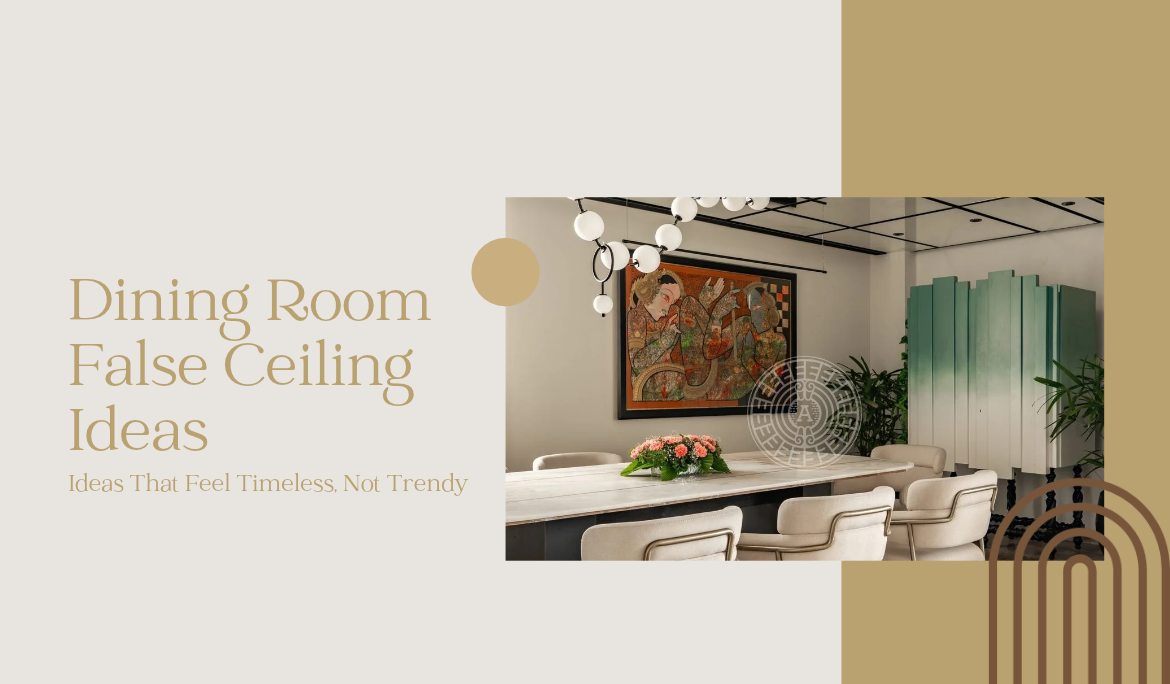
A timeless dining room false ceiling prioritizes architectural restraint, clean proportion, and concealed lighting over multi-tiered ornamental drops. The most enduring designs incorporate recessed perimeter shadow reveals (negative reveals), shallow coffered beams clad in natural wood veneer, flush-mounted linear slot diffusers for climate control, and warm 2700K indirect cove lighting (CRI >95). By treating the ceiling as a cohesive architectural plane rather than an isolated decorative feature, you create intimacy above the dining table without dating your interior.
Why False Ceilings in Dining Rooms Require Architectural Restraint
The dining room is one of the most intimate, social gathering spaces in any luxury residence. Yet, all too often, false ceiling designs fall into the trap of short-lived trends: aggressive multi-step gypsum drops, gaudy multi-colored RGB cove strips, or fussy geometric pop-outs that visually lower the room and clutter the eye.
At Essajees Atelier, our philosophy has always been that the ceiling is the “fifth wall” of an interior. It should define spatial volume, frame the dining zone, and conceal essential infrastructure, such as ducted HVAC, fire sprinklers, and architectural lighting, without ever drawing unnecessary attention to itself.
Designer Note:
“When designing a dining room ceiling, our first question is never ‘what decorative shape can we add?’ It is ‘how can this ceiling enhance the atmosphere around the dining table?’ If a ceiling detail does not solve lighting, acoustic comfort, or proportion, it shouldn’t exist.” – Sarah Sham, Principal Designer at Essajees Atelier
Timeless vs. Trendy Ceiling Design: Key Differences
Before selecting a concept, it is vital to understand the architectural distinctions between details that retain their elegance for decades and those that become dated within seasons.
| Design Element | Outdated / Faddish Ceilings | Timeless Architectural Ceilings (Essajees Standard) |
| Drop Profiles | Multi-tiered stepped drops (3–4 layers) | Single minimalist drop with recessed shadow reveal (negative reveal) |
| Lighting Integration | Bright exposed LED strip ropes (cool white/RGB) | Deeply recessed, baffled 2700K linear warm-dim LEDs (CRI 95+) |
| HVAC Integration | Bulky, visible plastic supply and return grilles | Seamless architectural linear slot diffusers (paint-matched) |
| Materiality | Plain, untextured white pop/gypsum board | Tactile finishes: Italian lime plaster, micro-cement, or smoked oak veneers |
| Chandelier Anchor | Generic circular ceiling medallion | Integrated recessed architectural niche or flush timber junction plate |
| Acoustics | Hard, reflective surfaces causing dining echo | Acoustic insulation backing or micro-perforated natural timber panels |
10 Enduring Dining Room False Ceiling Ideas
1. The Perimeter Negative Reveal (Shadow Gap)
Instead of running gypsum board flush into the perimeter wall with standard cornices, create a recessed 15mm x 15mm architectural shadow gap around the ceiling perimeter. Clad with an aluminum reveal profile, this makes the ceiling appear to hover weightlessly above the dining room. It creates crisp, museum-grade shadow lines that instantly elevate clean contemporary architecture.
2. Shallow Architectural Coffering with Smoked Oak Insets
Traditional coffering can feel heavy, but shallow coffered beams (dropping just 4 to 6 inches) provide exquisite structure to large dining rooms. Inset the recessed squares with natural smoked European oak or walnut veneer panels. The warm timber balances the cool stone of dining tables and introduces organic warmth overhead.
3. Flush Inverted Tray with Concealed 2700K Cove Lighting
A subtle inverted central tray, recessed upward by 75mm to 100mm directly above the dining table footprint, anchors the dining zone in open-plan residences. By concealing high-CRI (95+) 2700K LED ribbon within the reverse cove, a soft ambient glow washes across the ceiling without any visible light source.
4. Hand-Applied Venetian Lime Plaster (Marmorino Finish)
Transform a simple flat false ceiling into a tactile work of art. Applying a hand-troweled Italian lime plaster (Marmorino or Grassello) creates subtle variations in tone and sheen that catch both daylight and evening candlelight. This organic texture absorbs harsh light glares and imparts historic artisanal depth.
5. Linear Wood Slats with Integrated Acoustic Felt
Dining rooms often suffer from harsh reverberation due to marble floors and glass dining tables. Incorporating micro-slatted acoustic panels, crafted from natural white oak or teak with recycled black acoustic felt backing, controls sound transmission while adding warm, rhythmic linear texture.
6. The Barrel Vault Ceiling for Intimate Dining Alcoves
In private dining rooms or dedicated alcoves, a soft curved barrel vault false ceiling introduces classical softness. The curve gently diffuses light and cradles the dining table, creating an envelope of cocoon-like intimacy that rectangular rooms cannot match.
7. Dual-Plane Float with Architectural Linear Slot Diffusers
High-end dining demands invisible climate control. By creating a dual-plane false ceiling, you conceal ducted AC units while running continuous, rimless linear slot diffusers along the junction. Air flows silently and evenly across the room without unsightly wall grilles or drafts on diners.
8. Backlit Fluted Glass or Alabaster Inset Panels
For a dramatic, ambient dining experience, integrate custom brass-framed panels fitted with backlit fluted glass or translucent Spanish alabaster sheets. Lit from above with diffused dimmable LEDs, the ceiling radiates a soft, golden glow reminiscent of traditional lanterns.
9. Minimalist Recessed Chandelier Well
When installing a monumental sculptural chandelier (such as Giopato & Coombes or Apparatus Studio), avoid hanging it from a flat ceiling surface. Recess a clean circular or oval niche (50mm deep) above the fixture. This visually grounds the canopy, conceals driver electronics, and frames the fixture like an art installation.
10. Monochrome Plaster Molding with Clean Contemporary Profiles
If your home leans towards classical or neo-colonial architecture, traditional moldings can be reimagined. Avoid baroque filigree; instead, choose crisp, flat-step architrave moldings finished in the exact same matte paint tone as the ceiling plane. This creates sophisticated textural shadows without visual noise.
Technical Guidelines: Height, Lighting & HVAC Integration
A beautiful false ceiling design fails if practical dimensions and services are overlooked. Essajees Atelier, Luxury Interior Designer, adheres to strict architectural metrics:
- Clear Floor-to-Ceiling Height: Ensure the finished false ceiling leaves a minimum clear height of 2.75 meters (9 feet) above the finished floor level. Over the dining table itself, drops should never bring the clearance below 2.6 meters.
- Chandelier Suspension Height: The lowest point of your dining chandelier should hang between 30 and 36 inches (76 to 91 cm) above the tabletop surface for standard 8-foot ceilings, adding 3 inches for each additional foot of ceiling height.
- Correlated Color Temperature (CCT): Dining ceilings must utilize 2700K warm white lighting with a Color Rendering Index (CRI) of 95+. Cool white lighting (4000K–6500K) makes food appear unappetizing and destroys evening ambiance.
- Driver Accessibility: Always position remote LED drivers and transformers in accessible service panels (such as inside adjacent joinery or corridor closets) rather than sealing them permanently above gypsum boards.
Frequently Asked Questions (FAQ)
1. What is the ideal false ceiling height for a luxury dining room?
A luxury dining room should ideally maintain a finished ceiling height of at least 2.8 to 3.2 meters (9.2 to 10.5 feet). If structural ceilings are lower (around 2.7 meters), opt for a perimeter shadow reveal or a shallow 50mm drop to avoid compressing the space.
2. How do I prevent a dining room false ceiling from looking outdated?
Avoid complex multi-level curves, geometric zig-zags, and colored RGB lighting. Stick to single architectural drops, recessed perimeter shadow lines, high-quality tactile finishes (such as lime plaster or natural wood), and concealed architectural fixtures.
3. Should the false ceiling match the exact shape of the dining table?
Not necessarily. While a rectangular tray can complement a 10-seater rectangular dining table, an understated continuous ceiling with recessed linear reveals creates a more cohesive, architectural flow, especially in open-concept dining and living layouts.
Elevate Your Dining Space with Essajees Atelier
At Essajees Atelier, our design and turnkey execution teams oversee every millimetre of your home’s architecture, from custom ceiling joinery and bespoke lighting schemes to handcrafted dining tables and curated art.
Planning a bespoke luxury home or dining renovation?